
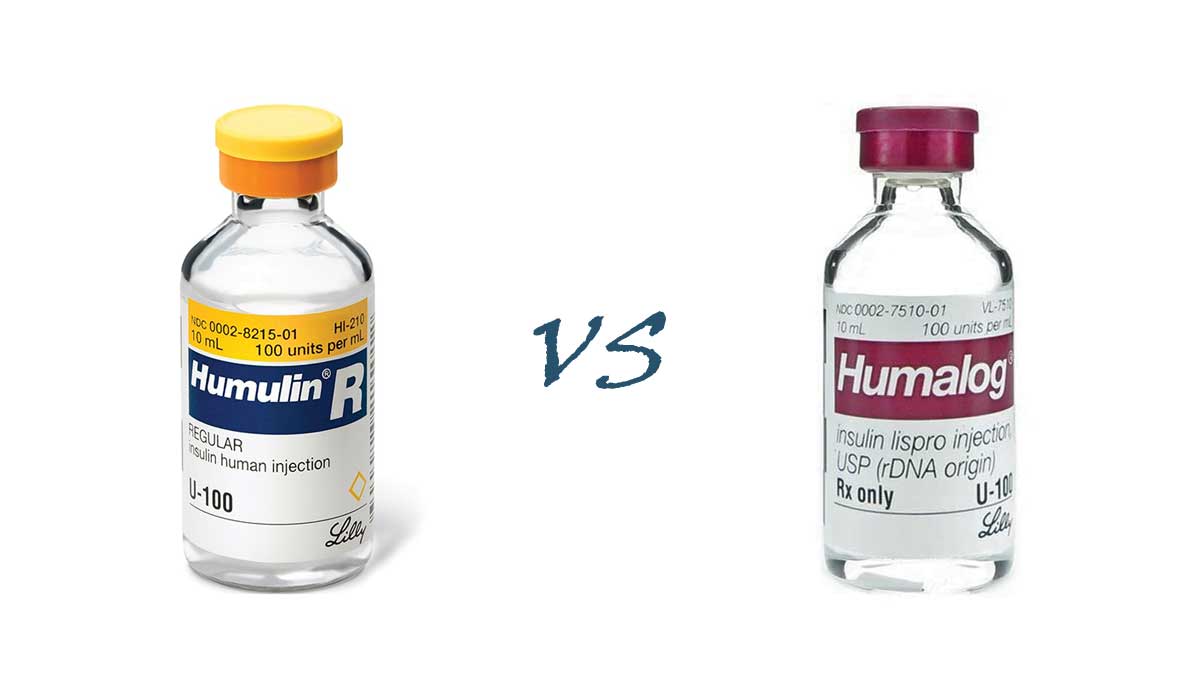
Humalog and Humulin are two insulin product lines made by Eli Lilly that look similar on a pharmacy shelf but behave very differently in the body. Humalog is a rapid-acting analog insulin (lispro). Humulin is a family of human insulins that includes Humulin R (short-acting regular) and Humulin N (intermediate-acting NPH). Picking the wrong one for the wrong situation is one of the most common avoidable causes of post-meal hyperglycemia and overnight hypoglycemia.
This guide breaks down how each one works, when each is appropriate, and how Humalog compares to its closest counterparts — Admelog (a lispro biosimilar), Humulin R, and Humulin N. For the practical injection technique itself, see how to inject semaglutide — the same subcutaneous technique applies to insulin pens.
Humalog vs Humulin: Key Differences at a Glance
The shortest answer: Humalog mimics the rapid burst of insulin a healthy pancreas releases after a meal, while Humulin R and Humulin N replace longer baseline insulin. Humalog starts acting in about 15 minutes; Humulin R takes around 30 minutes; Humulin N can take an hour or more. Humalog peaks in 30–90 minutes and is gone in roughly 3–5 hours. Humulin N peaks 4–12 hours after injection and stays in the system for up to 18 hours.
Both are FDA-approved, both are dosed in standard U-100 strength (Humulin R also comes in U-500 for severe insulin resistance), and both can be combined within the same regimen — bolus Humalog at meals plus basal Humulin N at bedtime is a classic split-dose schedule. Choosing between them is not a matter of brand loyalty; it is a matter of matching the insulin’s action profile to your blood-glucose pattern.
Humalog vs Humulin: Onset, Peak, Duration
The action profile is the single most useful number to know. The table below summarizes typical pharmacokinetics for adult subcutaneous injection at standard doses (individual response varies with site, depth, dose, exercise, and renal function).
| Insulin | Onset | Peak | Duration | Typical Use |
|---|---|---|---|---|
| Humalog (lispro) | ~15 min | 30–90 min | 3–5 hr | Mealtime bolus |
| Humulin R (regular) | ~30 min | 2–4 hr | 6–8 hr | Mealtime bolus or correction (older protocol) |
| Humulin N (NPH) | 1–3 hr | 4–12 hr | 12–18 hr | Basal coverage |
| Admelog (lispro biosimilar) | ~15 min | 30–90 min | 3–5 hr | Mealtime bolus (Humalog equivalent) |
Two things stand out. First, Humalog and Admelog are pharmacokinetically interchangeable — they are the same molecule. Second, Humulin N is in a different category entirely: its 12–18 hour duration makes it a basal insulin, not a meal insulin. Confusing N with R or with Humalog is the most common source of dosing errors.
How Humalog Works
Humalog is the brand name for insulin lispro, a rapid-acting analog approved by the FDA in 1996. Eli Lilly modified two amino acids on the B-chain of human insulin (lysine and proline are swapped at positions B28 and B29) so the molecule does not cluster into hexamers as readily in the subcutaneous tissue. Smaller clusters are absorbed faster, which is why lispro starts to lower blood glucose within 15 minutes of injection.
This profile matches the natural insulin spike that follows a meal. You inject Humalog 0–15 minutes before eating, the insulin curve rises with the carbohydrate curve, and both fall together. Patients on multiple daily injection (MDI) regimens typically use Humalog three times a day at meals, paired with a basal insulin (Humulin N, glargine, or detemir) once or twice daily. Humalog is also the most common insulin loaded into insulin pumps for continuous subcutaneous insulin infusion.
Humalog is supplied in U-100 strength as 10 mL vials, 3 mL KwikPen disposable pens, and Junior KwikPen (which dials in 0.5-unit increments for pediatric and insulin-sensitive patients). Storage matters: an unopened vial or pen lasts to its labeled expiration date in the refrigerator at 36–46°F. Once in use, Humalog can stay at room temperature (below 86°F) for up to 28 days; after that, the protein begins to degrade and potency drops, even if the solution still looks clear.
How Humulin Works
Humulin is not one insulin — it is a brand line of human insulins manufactured by Eli Lilly using recombinant DNA technology. The two formulations you will encounter most often are Humulin R and Humulin N. Both are bioidentical to native human insulin; what differs is the formulation in the vial.
Humulin R is regular insulin in a clear solution — no modifying additives. Subcutaneously, it forms hexamers that must dissociate before absorption, which is why onset is slower than lispro (about 30 minutes) and duration is longer (6–8 hours). Humulin N is NPH insulin: regular insulin complexed with protamine and zinc, which produces a cloudy suspension. The protamine slows absorption, stretching duration to 12–18 hours and creating a basal-like profile with a noticeable peak at 4–12 hours. Humulin 70/30 combines 70% NPH with 30% regular in a single vial as a premix for patients on simplified regimens — usually two injections a day before breakfast and dinner. The trade-off is flexibility: you cannot adjust the rapid and basal components independently.
For patients with severe insulin resistance (often above 200 units per day), Humulin R is also available in a concentrated U-500 vial. U-500 is five times stronger than U-100 and behaves more like an intermediate-acting insulin because the higher concentration delays absorption. It is dispensed only with a dedicated U-500 syringe to prevent dosing errors — using a standard U-100 syringe with U-500 insulin is a known cause of severe hypoglycemia and has prompted FDA safety advisories.
Humalog vs Admelog (Insulin Lispro Biosimilar)
Admelog is Sanofi’s insulin lispro biosimilar, FDA-approved in December 2017. Clinically it is the same active molecule as Humalog with the same onset, peak, and duration. The difference is regulatory and economic, not pharmacological.
Admelog launched roughly 15% cheaper than Humalog at list price, and that gap has widened in some markets where pharmacy benefit managers prefer biosimilars on formulary. For patients paying out of pocket, Admelog is often the lower-cost option. For patients on insurance, the choice depends on which lispro your plan covers preferentially — switching between Humalog and Admelog is generally a 1:1 unit-for-unit substitution and does not require dose adjustment, but you should confirm with your prescribing clinician before swapping.
One practical note: Admelog and Humalog use different pen designs (SoloStar vs KwikPen), so if you switch brands you also need to swap pen needles to a compatible type. The insulin itself behaves identically.
Humulin R vs Humalog: Rapid-Acting vs Short-Acting
Humulin R and Humalog are both used for mealtime coverage, but they belong to different generations of insulin therapy. Humulin R is regular human insulin; Humalog is a modified rapid-acting analog. The difference matters in three practical ways.
First, timing. Humulin R needs to be injected 30 minutes before a meal so the insulin curve catches the carbohydrate curve. Humalog can be injected immediately before eating — or even just after, in patients with unpredictable appetite (children, elderly, gastroparesis). Second, hypoglycemia risk. Humulin R’s 6–8 hour tail keeps insulin in circulation hours after the meal is digested, which raises late post-meal hypoglycemia risk. Humalog clears in 3–5 hours, closer to the body’s natural pattern.
Third, cost and access. Humulin R is significantly cheaper than Humalog and is sold over the counter in most U.S. states without a prescription (Walmart’s ReliOn brand of Humulin R, for example). For patients who lose insurance coverage, Humulin R is often the fallback option — but it requires more careful timing and meal planning.
Humulin N vs Humalog: Basal vs Bolus Insulin
This comparison is between two insulins that should not be substituted for each other. Humulin N is intermediate-acting basal insulin; Humalog is rapid-acting bolus insulin. They cover different parts of the day and do different jobs.
Humulin N is taken once or twice daily to provide background insulin coverage between meals and overnight. Its 4–12 hour peak means it can cause hypoglycemia in the late afternoon if dosed at breakfast, or in the middle of the night if dosed at bedtime — which is why many endocrinologists have shifted patients from Humulin N to peakless basal analogs (Lantus, Basaglar, Tresiba). Humalog, by contrast, is taken at the moment of eating and clears before the next meal.
Patients on a split-mixed regimen often use both: Humulin N twice a day for basal coverage, Humalog at each meal for prandial coverage. Confusing the two — for example, taking 20 units of Humulin N when you meant 20 units of Humalog before lunch — produces a 12-hour delayed insulin curve instead of an immediate one and is a recognized cause of severe overnight hypoglycemia. Always check the label and the cloudy/clear appearance before injection: Humalog is clear, Humulin N is cloudy.
How to Choose Between Humalog and Humulin
The choice between Humalog and Humulin is rarely either/or — most patients on insulin therapy use both, in different roles. The practical questions to ask your prescribing clinician are:
- What is your blood-glucose pattern? If post-meal spikes are the problem, you need a fast bolus (Humalog or Admelog). If fasting glucose is high, you need basal coverage (Humulin N or a peakless analog).
- How predictable is your eating schedule? Humalog tolerates variable meal timing because it’s injected right before food. Humulin R requires a 30-minute lead time and consistent meal sizes.
- What is your insurance and budget? Humulin R and N are the cheapest insulins available in the U.S., often without prescription. Humalog is more expensive but provides tighter glucose control. Admelog often splits the difference.
- Do you use a pump? Pumps run on rapid-acting analog only. Humalog (or Admelog) is appropriate; Humulin R and N are not used in pumps.
- Are you pregnant or planning pregnancy? Humalog and Humulin N both have safety data in pregnancy. Discuss the choice with your obstetrician and endocrinologist.
For patients managing weight along with diabetes, see the semaglutide treatment dosing schedule and the semaglutide dosage for weight loss guide — GLP-1 agonists can complement insulin therapy and reduce total insulin requirements.
Bottom Line: Practical Takeaways
Humalog is fast and short. Humulin R is slower and longer. Humulin N is slowest and longest. Admelog is Humalog by another name. The right insulin for you depends on which part of the daily glucose curve you are trying to flatten — meal spikes, fasting baseline, or both.
If you are starting insulin for the first time, work with an endocrinologist or a clinician trained in insulin titration to set up a regimen and adjust doses based on continuous glucose monitor or fingerstick data. Self-switching between Humalog and Humulin without dose adjustment is the single most preventable cause of insulin-related emergency room visits in adults with diabetes.
For more on injection technique and timing, see our guide on how to read insulin syringe units. Whichever insulin you end up on, the rules are the same: rotate injection sites within the same anatomical region (abdomen, thigh, upper arm, or buttock), watch for lipohypertrophy at frequently used sites, and store unopened pens in the refrigerator until you need them.
Frequently Asked Questions
Is Humalog and Humulin the same?
No. Humalog is the brand name for insulin lispro, a rapid-acting insulin analog that starts working in about 15 minutes and lasts 3 to 5 hours. Humulin is a brand line of human insulins that includes Humulin R (regular, short-acting) and Humulin N (NPH, intermediate-acting). They are made by the same company (Eli Lilly) but have different action profiles and different roles in a diabetes treatment plan.
What is the difference between Humalog and Humulin R?
Humalog is a modified rapid-acting analog that starts in 15 minutes, peaks at 30 to 90 minutes, and clears in 3 to 5 hours. Humulin R is unmodified regular human insulin that starts in about 30 minutes, peaks at 2 to 4 hours, and lasts 6 to 8 hours. Humalog tolerates flexible meal timing; Humulin R requires injection 30 minutes before eating and consistent meal sizes.
Is Humulin R the same as insulin lispro?
No. Humulin R is regular human insulin made by recombinant DNA technology — the molecule is identical to native human insulin. Insulin lispro (sold as Humalog or Admelog) is a modified analog where two amino acids on the B-chain are swapped, which speeds absorption. Lispro acts roughly twice as fast as Humulin R, so they are not interchangeable unit-for-unit and switching requires dose adjustment by a clinician.
Can you mix Humalog and Humulin in the same syringe?
Humalog and Humulin N (NPH) can be drawn into the same syringe immediately before injection — Humalog should be drawn first to avoid contaminating the rapid-acting vial with NPH. Humalog should not be mixed with insulin glargine or detemir. Premixed Humalog Mix 75/25 and Humalog Mix 50/50 already combine the two components in a stable formulation, which is safer than user mixing.
Which is better for type 1 diabetes — Humalog or Humulin?
Most adults with type 1 diabetes use both: a rapid-acting analog like Humalog at meals (bolus) plus a basal insulin like Humulin N or a peakless analog at bedtime. Humalog alone is not enough because it clears in 5 hours and leaves you uncovered overnight. Humulin N alone produces post-meal hyperglycemia. The right combination depends on your continuous glucose monitor data and is set by an endocrinologist.
How long does Humalog last compared to Humulin?
Humalog clears in 3 to 5 hours after injection. Humulin R lasts 6 to 8 hours. Humulin N has the longest action, 12 to 18 hours, which is why it is used as a basal insulin. Humalog is shorter than both Humulin formulations because the lispro modification keeps the molecule from forming hexamers in the subcutaneous tissue, so it absorbs and clears faster.
Can you switch between Humalog and Admelog?
Yes, in most cases. Admelog is Sanofi's insulin lispro biosimilar approved by the FDA in 2017, with the same active molecule and the same onset, peak, and duration as Humalog. Switching is generally a 1:1 unit-for-unit substitution. Confirm with your prescribing clinician before changing brands, and note that the pen designs differ (Admelog SoloStar vs Humalog KwikPen) so you may need a different pen needle size.