
Reviewed by Dr. Bismah Irfan, MD — June 2026
During my medical training, depression was taught as essentially a chemistry problem in the brain — too little serotonin or dopamine, corrected with a medication that nudges those neurotransmitters. That model genuinely helps a lot of people. But for a meaningful number of patients, it explains only part of the picture, and the missing part often isn’t in the brain at all. It’s in the body.
In a recent episode of Wellness Focused, I walked through one of the most important shifts in how we understand mood: the connection between chronic inflammation and depression. For some people, treating the body’s inflammation does as much for their mental health as anything aimed directly at the brain. Here is what the science actually shows — and where the honest limits are.
A Patient Who Had “Tried Everything”
I think of a 38-year-old teacher who had carried a diagnosis of major depression for five years. She had worked through multiple medications and therapy, and still struggled with low mood, fatigue, and a cognitive fog she described as “thinking through wet cement.”
What stood out wasn’t on her psychiatric chart. It was the rest of her history: chronic sinus infections, recurrent urinary tract infections, and joint pain that had been creeping up for years. Her testing showed clear signs of systemic inflammation — an elevated high-sensitivity C-reactive protein, several food sensitivities, markers suggesting a leaky gut barrier, and evidence of mold exposure in her home.
None of that proves inflammation caused her depression. But it gave us something her previous care hadn’t: a set of physical, treatable drivers to address alongside her existing mental-health treatment, not instead of it.
How Inflammation Reaches the Brain
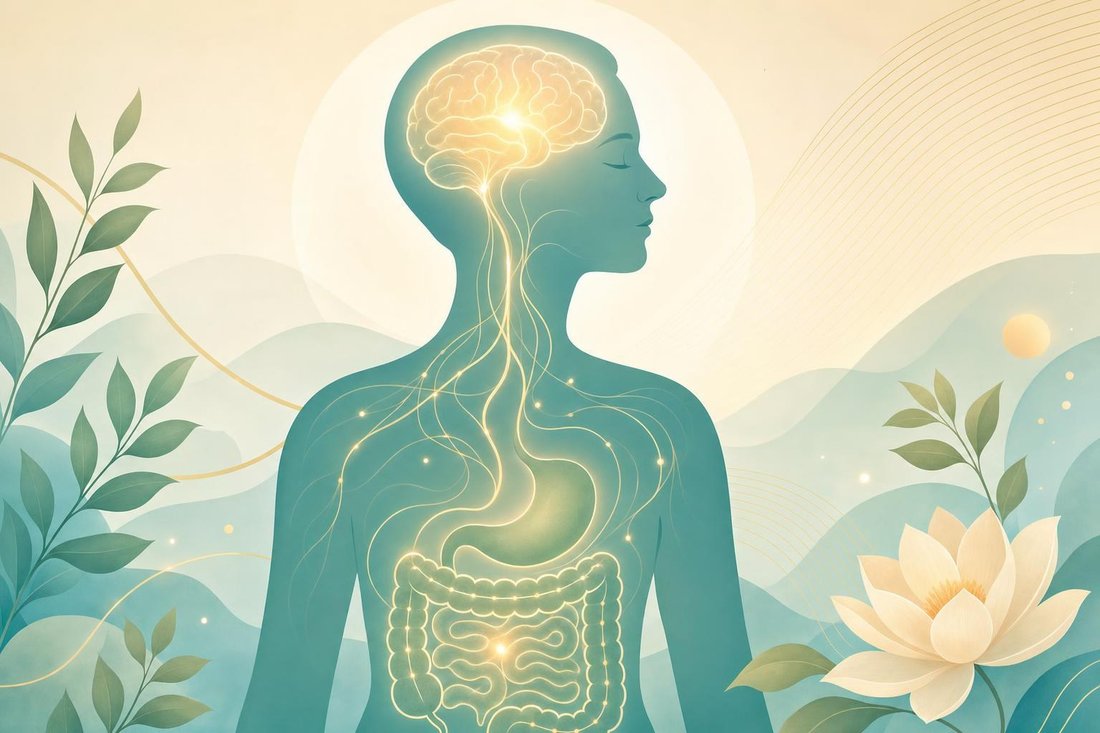
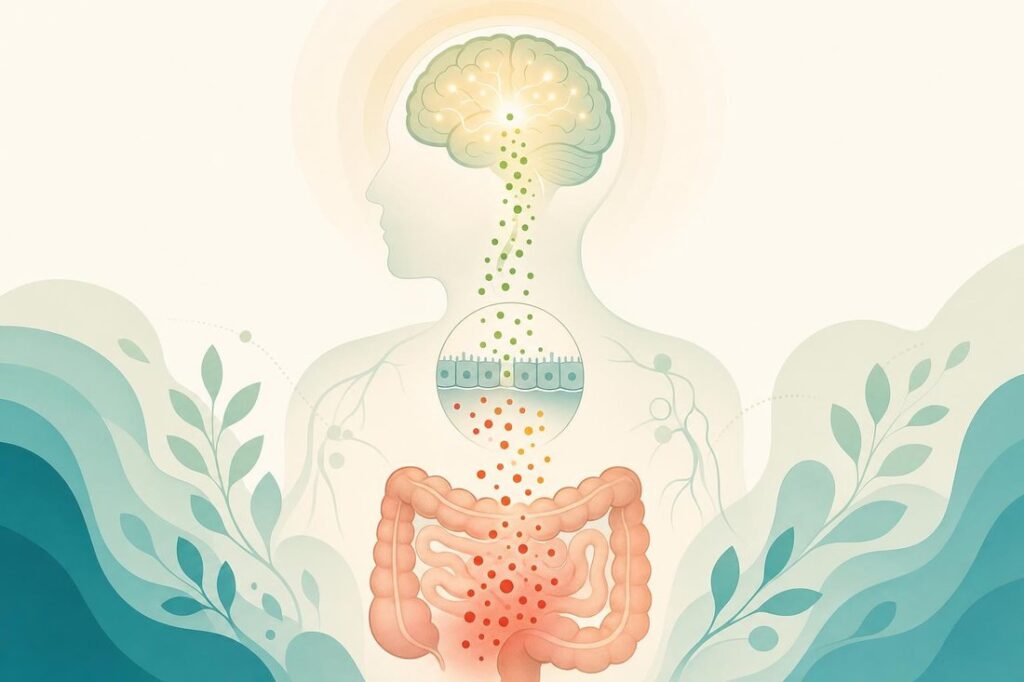
The traditional view of depression centers on neurotransmitters, and they’re certainly involved. But research increasingly shows that inflammation in the body can directly influence mood and brain function through several well-mapped routes.
The first is signaling. Inflammation in the body doesn’t stay in the body — it sends messages to the brain that can trigger neuroinflammation, inflammation within brain tissue itself. The brain’s resident immune cells, called microglia, respond to those signals by releasing pro-inflammatory molecules locally, and that activity has been linked to depressive symptoms (Yang et al., Front Immunol 2020).
The second route runs straight through the serotonin story. Inflammation activates an enzyme called IDO, which diverts tryptophan — the raw material your body uses to make serotonin — down a different metabolic path. When inflammation is chronic, less tryptophan is available for serotonin production (Tao et al., Int J Mol Sci 2020). So inflammation and the “serotonin model” aren’t competing explanations; they’re connected.
The third is the blood-brain barrier — the protective filter that keeps harmful substances in the bloodstream out of brain tissue. Systemic inflammation can make that barrier more permeable, allowing inflammatory molecules easier access to the brain and promoting depression-like changes in animal models (Haruwaka et al., Nat Commun 2019; Menard et al., Nat Neurosci 2017).
Chronic stress sits underneath much of this. Sustained stress and the inflammation it generates can blunt how the body responds to its own cortisol, a pattern tied to the biology of major depression (Hassamal, Front Psychiatry 2023).
Signs Inflammation Might Be Part of Your Picture
This connection doesn’t apply to everyone with depression, and it’s not a diagnosis you can make from a blog post. But a few patterns make me look harder at inflammation as a contributor:
- Depression alongside physical symptoms like persistent fatigue, brain fog, joint pain, digestive trouble, or frequent infections
- Limited response to standard antidepressant medication despite a fair trial
- A history of autoimmune issues, gut problems, or known environmental exposures like mold
When that profile is present, the tests I often discuss with patients include high-sensitivity C-reactive protein (hs-CRP), inflammatory markers such as IL-6 and TNF-α, an omega-3 to omega-6 ratio, comprehensive stool testing for gut imbalance and barrier issues, and, where it fits, food-sensitivity and autoimmune panels. An hs-CRP above roughly 1.0 mg/L, for instance, may point toward an inflammatory component worth exploring — in context, not in isolation.
An Anti-Inflammatory Approach — Alongside, Not Instead Of
When inflammation does appear to be feeding someone’s depression, functional medicine focuses on finding and addressing those root drivers while supporting the body’s own anti-inflammatory systems. This is always meant to work with psychiatric and psychological care, never to replace it. Here’s the framework I use.
Nutrition first
An anti-inflammatory way of eating is the foundation: minimizing processed foods, refined sugar, and industrial seed oils; identifying and removing individual food sensitivities; and building meals around colorful vegetables, healthy fats, and quality protein. For the teacher I mentioned, removing gluten, dairy, and eggs while adding omega-3-rich foods made a noticeable difference within a few weeks — though the specific triggers are different for every person.
Gut health
Because the gut is a major source of body-wide inflammation, healing it is often central. That can mean addressing overgrowths or imbalances, rebuilding beneficial bacteria, and supplying the nutrients the gut lining needs to repair. Fermented foods (if tolerated) and prebiotic fiber that feeds good bacteria are accessible starting points.
Targeted, well-chosen supplements
A few compounds have reasonable evidence for calming neuroinflammation and supporting mood. Omega-3 fatty acids, particularly EPA, have been studied for both inflammation and depressive symptoms. Curcumin, the active compound in turmeric, has shown anti-inflammatory and mood benefits in several trials, and botanicals like saffron have early clinical support as well (Mokhtari, Phytother Res 2022; Ahmad et al., Heliyon 2022). With supplements, quality genuinely matters — many products contain fillers or contaminants — and some can interact with prescription medications, so these are worth running by your physician rather than self-prescribing.
Sleep, stress, and movement
Poor sleep and chronic stress are both powerful drivers of inflammation, so addressing them isn’t optional. Mindfulness, breathwork, and consistent sleep habits all help. And regular, moderate exercise is one of the most reliable anti-inflammatory tools we have — it also raises BDNF (brain-derived neurotrophic factor), a protein that supports brain health and resilience. Even 30 minutes of daily walking counts.
Reducing the load
Where environmental triggers are part of the story — mold, water or air quality, harsh household chemicals — reducing that exposure and supporting the body’s natural detoxification pathways takes one more source of inflammation off the table.
For the teacher, a comprehensive plan built around these pillars led, over about six months, to a substantial drop in her depression rating scores and normalized inflammatory markers, and — under her psychiatrist’s supervision — a reduction in her medication. I want to be honest about what that means: results like hers vary widely and are not typical. Some people improve dramatically, others modestly, and the work is highly individual.
What You Can Start Today
If this resonates, there are reasonable, low-risk steps you can take while you arrange proper testing:
- Shift toward an anti-inflammatory plate — more colorful vegetables and fruit, omega-3-rich foods like wild-caught salmon and walnuts, and anti-inflammatory spices like turmeric, ginger, and cinnamon; less processed food, refined sugar, and industrial seed oil.
- Support your gut with fermented foods (if tolerated), prebiotic fiber, and good hydration.
- Protect your sleep and build in a daily stress-reduction practice — even a few minutes of breathwork.
- Move your body most days.
- Consider foundational supplements like a high-quality omega-3, vitamin D3 (ideally after testing your level), and magnesium glycinate — after checking with your clinician.
Most importantly, do this with your healthcare team. Ask your doctor about checking inflammatory markers like hs-CRP, and keep your mental-health provider fully in the loop. Never stop or change a prescribed medication on your own — any medication adjustment belongs with the provider who prescribed it. If you’re in crisis or having thoughts of self-harm, please reach out to a crisis line or emergency services right away; the approaches here are for long-term root-cause work, not acute care.
The Bigger Shift
The inflammation-depression connection reflects a larger truth in how I practice: your brain doesn’t exist in isolation from the rest of your body. When we treat depression as, for some people, a whole-body inflammatory condition rather than only a brain-chemistry problem, we open up avenues for healing that go beyond managing symptoms. In my experience, when the inflammatory load lifts, the fog often lifts with it — energy returns, thinking clears, and physical health tends to improve in parallel.
At iVitality MD in Houston, Dr. Bismah Irfan takes this integrative, root-cause approach — comprehensive testing, gut and nutritional assessment, and a plan that works alongside your existing mental-health care. Book a consultation with iVitality MD →
Selected References
- Tao X, Yan M, Wang L, et al. Homeostasis Imbalance of Microglia and Astrocytes … in LPS-Induced Depressive-Like Mice. Int J Mol Sci. 2020. doi.org
- Yang L, Zhou Y, Jia H, et al. Affective Immunology: The Crosstalk Between Microglia and Astrocytes. Front Immunol. 2020. doi.org
- Haruwaka K, Ikegami A, Tachibana Y, et al. Dual Microglia Effects on Blood-Brain Barrier Permeability Induced by Systemic Inflammation. Nat Commun. 2019. doi.org
- Menard C, Pfau ML, Hodes GE, et al. Social Stress Induces Neurovascular Pathology Promoting Depression. Nat Neurosci. 2017. doi.org
- Hassamal S. Chronic Stress, Neuroinflammation, and Depression. Front Psychiatry. 2023. doi.org
- Mokhtari T. Targeting Autophagy and Neuroinflammation Pathways With Plant-Derived Natural Compounds as Potential Antidepressant Agents. Phytother Res. 2022. doi.org
- Ahmad S, Azhar A, Tikmani P, et al. A Randomized Clinical Trial … Chamomile and Saffron for Neuroprotective and Anti-Inflammatory Responses in Depressive Patients. Heliyon. 2022. doi.org
This article is for educational purposes only and is not medical advice, nor a claim to diagnose, treat, or cure any condition including depression. Depression is a serious medical condition that requires professional care. The approaches described are meant to complement — never replace — treatment from your physician and mental-health provider. Do not start, stop, or change any medication without professional guidance. If you are in crisis, contact emergency services or a crisis line immediately.
Frequently Asked Questions
Can inflammation cause depression?
For a meaningful number of people, yes. Inflammation can reach the brain and affect mood, motivation, and energy, which is why some patients who had tried everything else improve when the inflammation is addressed. It does not replace the chemistry model of depression; it adds a layer that is often missed.
How does inflammation reach the brain?
Inflammatory signals from the body can cross to the brain and influence the same circuits involved in mood and energy, producing symptoms like fatigue, brain fog, and low motivation alongside low mood.
What are signs inflammation might be part of your depression?
Clues include depression that has not responded to standard treatment, prominent fatigue and brain fog, and the presence of inflammatory conditions or drivers like poor sleep, gut issues, or chronic stress. Testing can help confirm whether it is a factor.