Most men do not come to see me about their prostate. They come about fatigue, or weight that will not move, or blood sugar creeping up, and then somewhere near the end of the visit, usually while putting a jacket back on, they mention the other thing. Getting up twice a night. A stream that takes a while to start. The feeling of never quite finishing.
And when they have already raised it with a doctor, the conversation they describe is almost always the same one: this happens with age, it runs in families, here is a medication, come back in a year. That is not wrong. It is just a very small slice of what is going on.
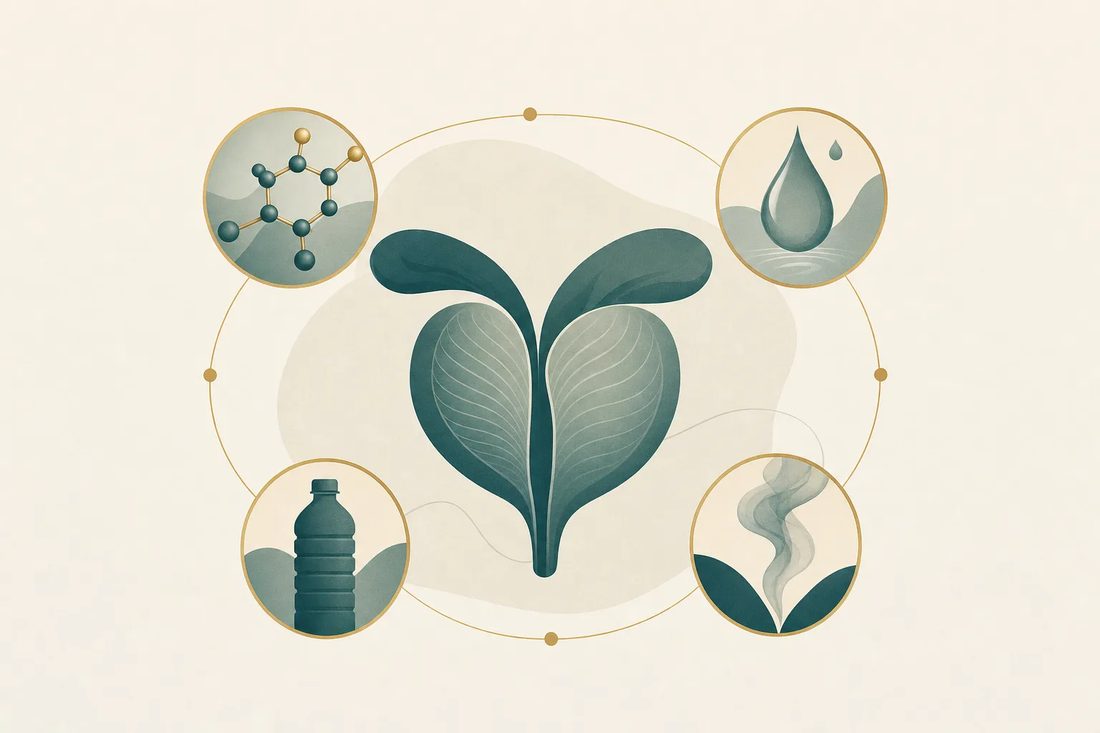
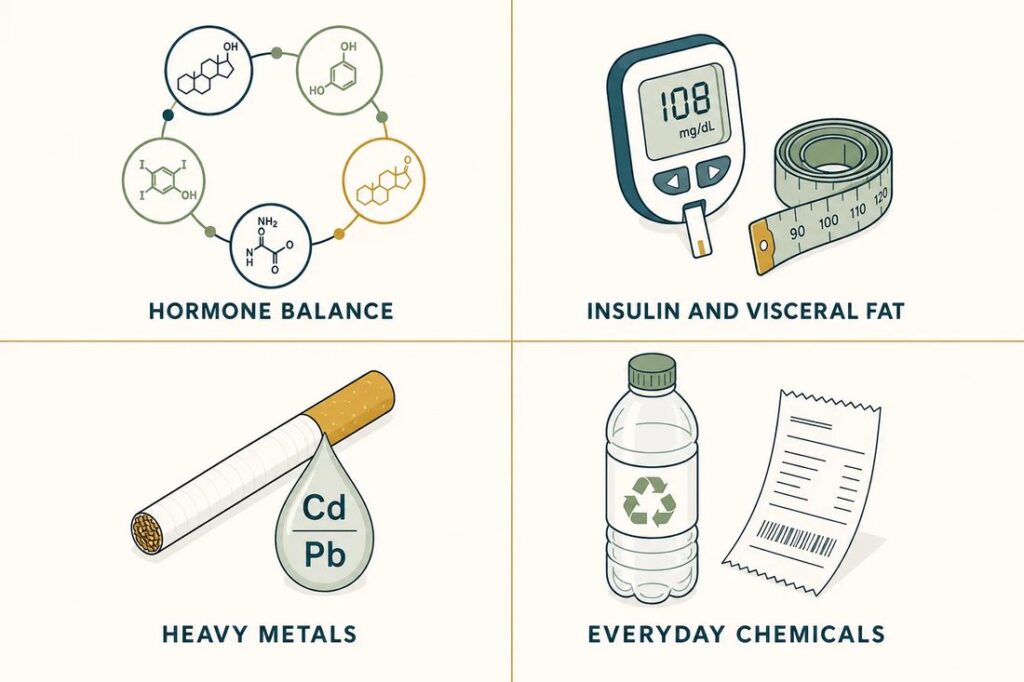
An enlarging prostate is not only an aging story. It sits at the intersection of hormone balance, metabolic health, inflammation and environmental exposure, and every one of those is something you can measure and influence. That is the part of the conversation I want to have.
First, the part I will not skip
Urinary symptoms in men are not automatically benign prostatic hyperplasia. They can also come from infection, bladder dysfunction, neurologic conditions, medication side effects, and occasionally from prostate cancer. Before anyone starts talking to you about root causes, you need a proper urological evaluation: a history, a physical exam, a urinalysis, and a discussion about PSA testing that fits your age and risk.
Get urgent care if you cannot urinate at all, if there is blood in your urine, or if you have fever with urinary symptoms. None of what follows replaces that assessment. It picks up where that assessment leaves off, which in my experience is where most men get stranded.
The hormone story is bigger than testosterone
Nearly every man I meet has absorbed one fact about the prostate: DHT makes it grow. That is true. Testosterone is converted to dihydrotestosterone by the enzyme 5-alpha reductase, and DHT is the most potent driver of prostate tissue growth. It is why the medications in this class work.
What almost nobody has been told is that estrogen is doing a great deal of the work too, and that men make estrogen inside the prostate itself.
The enzyme responsible is aromatase, which converts testosterone into estradiol. In laboratory work on human prostate tissue, aromatase activity was detected in the stromal cells, the supporting connective tissue of the gland, and estradiol moderately increased the proliferation of those stromal cells through estrogen receptor signaling (Ho et al., J Endocrinol 2008). In other words, the gland can manufacture its own growth signal locally, using testosterone as the raw material, regardless of what your blood estrogen level looks like on a lab report.
Now layer in what happens with age. Testosterone tends to fall. Visceral fat, the deep abdominal fat around the organs, tends to rise, and visceral fat is itself full of aromatase. So more testosterone gets converted to estrogen in the periphery at the same time as less is being produced. The ratio shifts, and the tissue reads that shift.
This is why I find the “just block DHT” framing incomplete. It is a reasonable intervention for symptoms and it has a real evidence base. But it does not answer the more useful question, which is why 5-alpha reductase activity and local estrogen production went up in this particular man in the first place. Chronic inflammation, insulin resistance and low zinc status all show up in that literature, and all three are addressable.
The metabolic layer nobody connects
If I could get one idea across to men in their fifties, it would be this: your prostate is a metabolic organ, and it is reading the same signals as the rest of you.
The association between metabolic syndrome and benign prostatic hyperplasia is well documented, with reported prevalence of metabolic syndrome in men with lower urinary tract symptoms ranging from roughly a quarter to over half depending on the population studied (Rył & Rotter, Diabetol Metab Syndr 2015). Insulin resistance, central obesity, blood pressure and lipid abnormalities each track with worse symptoms and larger glands, and the proposed mechanisms are the ones you would expect: insulin and IGF-1 are growth signals, visceral fat shifts the hormone balance, and low-grade inflammation runs underneath both.
Sex hormone binding globulin is worth mentioning here because it is the quiet variable. SHBG falls with insulin resistance, which changes how much of your testosterone is free and biologically active, and it is rarely ordered. A total testosterone number without SHBG tells you much less than most men assume.
The practical upshot is that fasting insulin, HbA1c and waist circumference belong in a prostate workup. Not because they treat the prostate directly, but because they describe the environment the gland is growing in.
Cadmium, and why smoking history matters here
Of all the heavy metals, cadmium is the one that keeps appearing in prostate research. It behaves as what researchers call a metalloestrogen: it can bind estrogen receptors and mimic estrogen signaling in tissue. It accumulates preferentially in the kidney and the prostate, and the body has no efficient way to clear it, so exposure integrates over a lifetime.
The largest single source in most people is tobacco smoke, including secondhand exposure. Industrial work, certain phosphate fertilizers, contaminated water and some shellfish contribute as well.
In animal work, a single low dose of cadmium was enough to produce a benign prostatic hyperplasia-like condition in rats, which the authors proposed as a model for studying the disease (Prajapati et al., Exp Biol Med 2014). I want to be straight about the limits of that. Cadmium’s link to prostate cancer has been studied more extensively than its link to benign enlargement, and the human evidence for cadmium specifically causing BPH is still unclear. What I take from it clinically is narrower: if a man in front of me has a long smoking history or occupational metal exposure and an enlarging prostate, cadmium belongs on the list of things worth measuring rather than assuming away.
The chemicals that act like hormones
Endocrine-disrupting chemicals are the part of this that people find hardest to take seriously, because the exposures are so ordinary. Phthalates are in flexible plastics, in personal care products, and in essentially anything carrying a synthetic fragrance. Bisphenols line cans and coat thermal receipt paper. These compounds interact with hormone receptors and hormone metabolism, and the prostate is a hormone-driven organ.
The human data specific to enlargement is thinner than the data on prostate cancer, but it exists. A study of elderly Taiwanese men with benign prostatic hyperplasia found associations between phthalate exposure and prostatic enlargement, with sex hormone changes and oxidative stress appearing to mediate the effect (Chang et al., Environ Int 2019). PFAS, the persistent “forever chemicals,” disrupt thyroid signaling and have been examined in relation to prostate outcomes, though I would call that literature early rather than settled.
There is one more thread worth flagging honestly, because I see it repeated with more confidence than it deserves. Gut bacteria produce an enzyme called beta-glucuronidase that can uncouple estrogens the liver has already packaged for elimination, sending them back into circulation. That mechanism is real and it is well studied, mostly in the context of estrogen-related conditions in women. Extending it to prostate enlargement is biologically plausible and it is what I would call a working hypothesis, not an established pathway. I mention it because gut health is worth attending to for many reasons, not because I can tell you it will shrink your prostate.
What I actually order
A conventional prostate workup gives you a PSA and a total testosterone. That is a thin picture for a hormone-driven, metabolically-driven condition. What I want to see, alongside the standard urological assessment:
- Hormone panel with the full picture. Total and free testosterone, estradiol using a sensitive assay, SHBG, and DHT where it will change the plan. The ratios matter more than any single value.
- Metabolic markers. Fasting insulin and glucose so HOMA-IR can be calculated, HbA1c, a full lipid panel, and waist circumference actually measured rather than estimated.
- Inflammatory markers. High-sensitivity CRP at minimum. Inflammation is the common road that hormone imbalance and metabolic dysfunction both travel down.
- Nutrient status. Zinc and vitamin D. The prostate concentrates zinc more than almost any other soft tissue in the body, and status is worth knowing before anyone starts supplementing blindly.
- Heavy metals, when the history justifies it. Not as a routine screen. When there is a real exposure story such as smoking, industrial work, older housing or well water, testing gives you something to act on.
What moves the needle
The interventions here are unglamorous, and that is exactly why I trust them. They also happen to be the same things that protect your heart and your kidneys, which is usually how you can tell a recommendation is pointed at a real mechanism.
Reduce visceral fat. This is the single highest-leverage item on the list, because abdominal fat is an aromatase factory and a driver of insulin resistance at the same time. You are not chasing a number on the scale. You are changing where your hormones get made.
Lift something heavy, regularly. Resistance training improves insulin sensitivity and preserves muscle mass, and muscle is where glucose disposal happens. Two or three sessions a week is enough to change the metabolic picture.
Take the plastic out of the hot and fatty things. Exposure is dominated by a few habits, so start there: no reheating food in plastic, glass or steel for storage, and skip the fragranced personal care products. You do not have to overhaul your life to cut your daily load substantially.
Filter your water, and know what is in it. Municipal water quality reports are public. If you are on a well, test it. This matters more in some parts of Texas than others, and it is worth ten minutes of looking rather than guessing.
Eat for your liver and your gut. Cruciferous vegetables support the pathways that clear hormones, and adequate fiber supports elimination once they are cleared. Enough protein, enough magnesium, adequate zinc from food.
Deal with sleep and stress, seriously. Elevated cortisol increases aromatase activity and impairs hormone clearance through the liver. Poor sleep worsens insulin resistance directly. These are not soft recommendations in this context.
Stop smoking, if that applies. It is the dominant cadmium source and it damages vascular function everywhere, including the pelvis.
The way I think about it
An enlarged prostate gets framed as an inevitability, something that happens to men the way gray hair does. Age is genuinely a risk factor and I am not going to pretend otherwise. But treating it as inevitable means never asking why one 58-year-old has a 30-gram gland and another has an 80-gram gland, and that difference is not written in the calendar.
It is written in hormone ratios, in insulin sensitivity, in inflammation, in what a man has been breathing and drinking and storing his food in for thirty years. Some of that cannot be undone. A surprising amount of it can be changed, and the changes tend to show up in more places than the one you came in about.
If you want to look at your own picture properly, that is the kind of workup we do at iVitality: the full hormone panel rather than a single number, the metabolic markers alongside it, and a plan built from what your results actually say.
This article is for educational purposes and is not medical advice. Urinary symptoms require evaluation by a qualified clinician, and no supplement or lifestyle change should replace that assessment. Discuss any testing or treatment decisions with your own physician.
Frequently Asked Questions
What causes an enlarged prostate besides aging?
Age is a genuine risk factor, but it does not explain why two men of the same age can have very different sized glands. The drivers that are measurable and modifiable are hormone balance (particularly the shift toward estrogen produced locally by aromatase), insulin resistance and visceral fat, chronic low-grade inflammation, and cumulative exposure to heavy metals such as cadmium and to endocrine-disrupting chemicals.
Can insulin resistance make an enlarged prostate worse?
The association between metabolic syndrome and benign prostatic hyperplasia is well documented, with reported prevalence of metabolic syndrome among men with lower urinary tract symptoms ranging from roughly a quarter to more than half depending on the population. Insulin and IGF-1 act as growth signals, visceral fat shifts the hormone balance, and inflammation runs underneath both. Fasting insulin and HbA1c are worth having in a prostate workup.
Does estrogen play a role in prostate enlargement in men?
Yes, and it is often overlooked. The enzyme aromatase converts testosterone into estradiol, and laboratory work on human prostate tissue found aromatase activity in the stromal cells of the gland, with estradiol increasing the proliferation of those cells. That means the prostate can generate its own local estrogen signal regardless of what a blood estrogen level shows. Visceral fat adds to this, because fat tissue is also rich in aromatase.
Can plastics and everyday chemicals affect the prostate?
The prostate is a hormone-driven organ, and phthalates and bisphenols interact with hormone receptors and hormone metabolism. Human evidence specific to enlargement is thinner than the evidence on prostate cancer, but a study of elderly men with benign prostatic hyperplasia found associations between phthalate exposure and prostatic enlargement, with sex hormone changes and oxidative stress appearing to mediate the effect. Reducing exposure is low risk and worth doing.
What lab tests should I ask for if I have urinary symptoms?
Alongside a standard urological assessment, a fuller picture usually means total and free testosterone, estradiol on a sensitive assay, SHBG, and DHT where it will change the plan; fasting insulin and glucose so HOMA-IR can be calculated, plus HbA1c and a lipid panel; high-sensitivity CRP; and zinc and vitamin D status. Heavy metal testing is worth adding when there is a genuine exposure history such as smoking or industrial work.
Does losing belly fat help prostate symptoms?
Reducing visceral fat is the highest-leverage lifestyle change in this picture, because abdominal fat is both a major site of testosterone-to-estrogen conversion and a driver of insulin resistance. The goal is not a number on the scale but a change in where hormones are being produced and how the body handles glucose. Resistance training two or three times a week supports both at once.
Is low testosterone good or bad for the prostate?
It is not as simple as more testosterone meaning more growth. When testosterone falls, the relative balance can tip toward estrogen and toward greater sensitivity to DHT, so low testosterone is not automatically protective. This is why looking at ratios and at SHBG matters more than reading a single total testosterone value, and why hormone decisions belong with a clinician who has the full panel in front of them.
When are urinary symptoms an emergency?
Seek urgent care if you cannot urinate at all, if there is blood in your urine, or if you have fever along with urinary symptoms. Urinary symptoms in men are not automatically benign prostatic hyperplasia and can come from infection, bladder or neurologic problems, medication side effects or prostate cancer, so a proper urological evaluation comes first, before any root-cause work.